Their Home Is Wherever a Jew Needs One
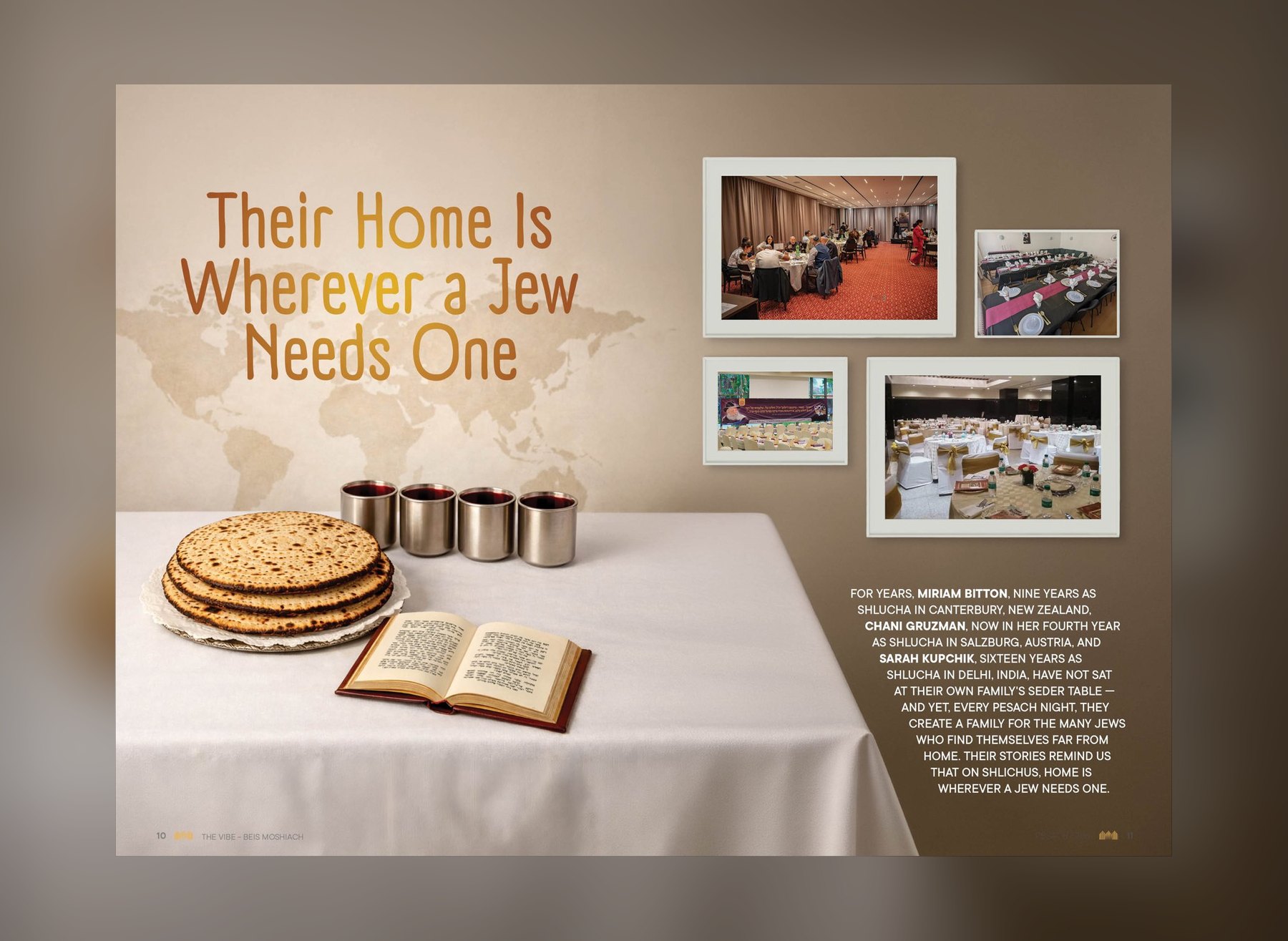
For years, Miriam Bitton, nine years as shlucha in Canterbury, New Zealand, Chani Gruzman, now in her fourth year as shlucha in Salzburg, Austria, and Sarah Kupchik, sixteen years as shlucha in Delhi, India, have not sat at their own family’s Seder table – and yet, every Pesach night, they create a family for the many Jews who find themselves far from home. Their stories remind us that on shlichus, home is wherever a Jew needs one.
Chani Gruzman grew up on a shlichus in Russia. Today she is a shlucha in Austria, now in her third year, and a mother of two.
What does your Pesach Seder look like?
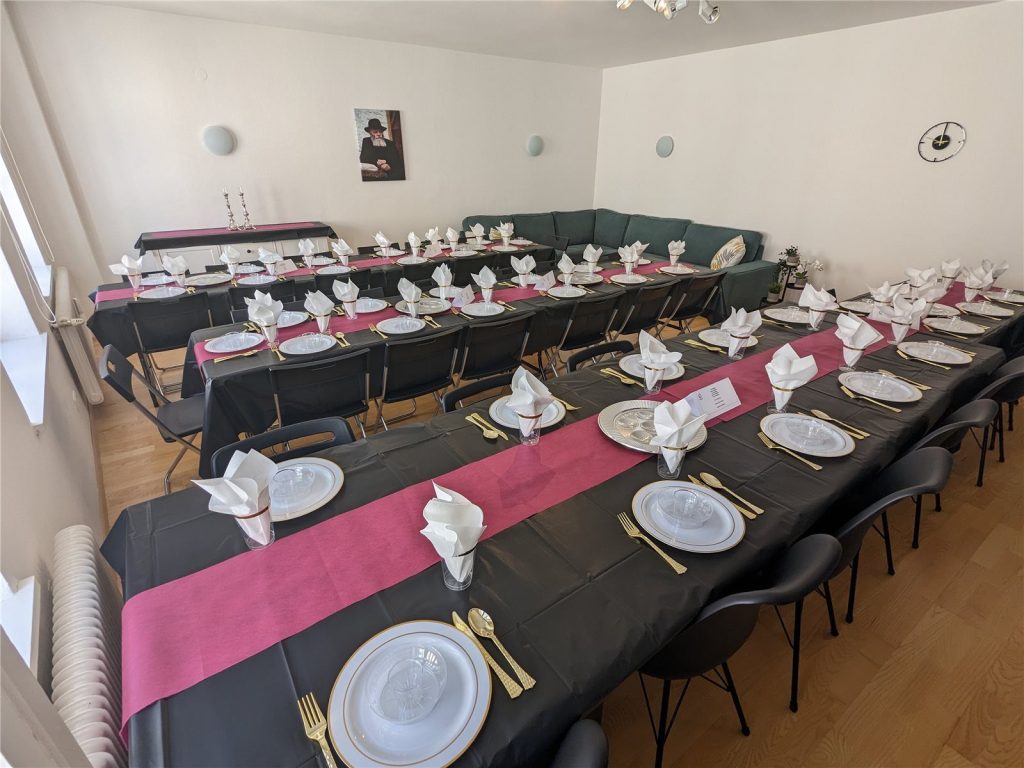
In our first year on shlichus, we held the Seder in our living room. We didn’t know how many people would come and wondered if there would be enough space. In the end, forty-five people showed up. It was crowded but it was just enough space. One of those who came was a local; the rest were tourists. We hadn’t yet had the chance to get to know the local Jewish community.
A year passed, and for our second Seder in the city, we held it in a hall. Sixty people came, twenty of them locals we had managed to collect along the way. Every year, two of my brothers – yeshiva bachurim from Eretz Yisrael – also come to help. They helped us enormously with the preparations and running of the Seder, explaining what is done at each stage, and more.
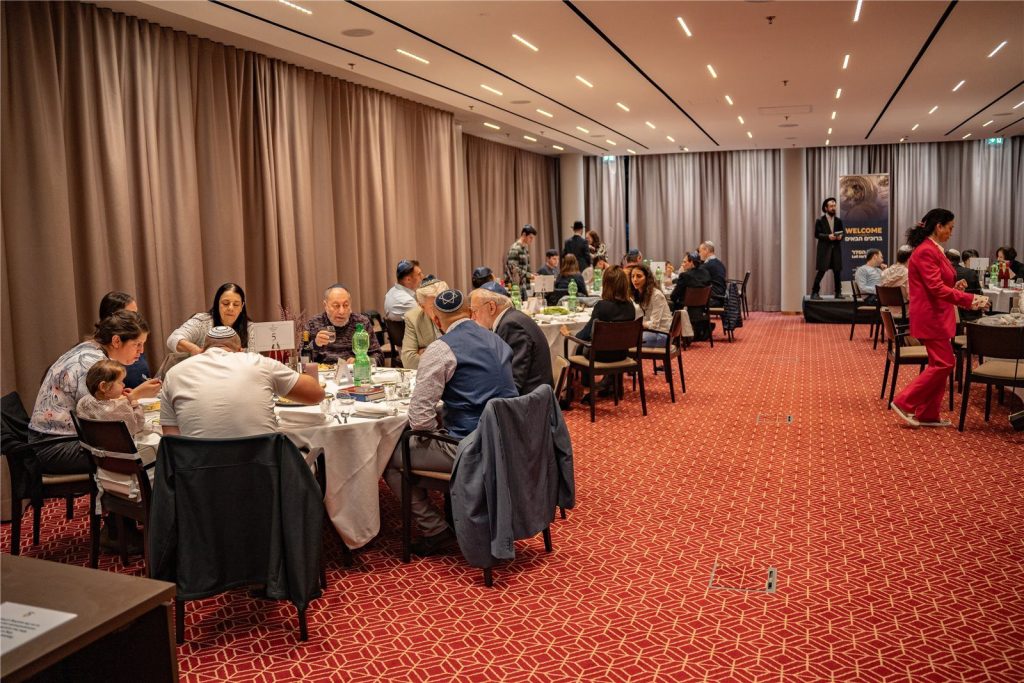
We begin the Seder event before Yom Tov officially starts. That way we can serve guests refreshments before diving deep into the Haggada – so they don’t lose patience – and the women get to light candles while the men can put on tefillin before sunset.
The first year, we weren’t able to conduct our own Seder while simultaneously guiding and producing the event. We planned to hold our private Seder after the public one ended, but that only half-worked. The event finished around eleven at night and we were completely drained. So the second year, we tried doing our own Seder with our own private food that we brought at the same time as we ran the public one. That actually worked. Up until Shulchan Orech, we managed to run both the public and private Seders simultaneously, and after the public Seder ended, we completed the rest of our own.
Logistics
Providing food for the Seder isn’t simple. It’s very difficult to prepare food on my own for sixty people, in my kitchen at home – especially on Pesach, when everything is more complicated. The nearest kosher caterer is in Vienna, four hours away. We ordered kosher-for-Pesach meals from there and had to arrange for someone to bring them to us on Erev Yom Tov.
The first Pesach we made here was also the first I ever organized on my own (before this, we always went to others). It was complicated also because the second day fell out right before Shabbos, giving us three consecutive days of Yom Tov. The day after the Seder, I discovered that the non-Jewish helper who came that evening had turned off the stovetop we had left on – meaning I couldn’t cook for the rest of the holiday as I had planned.
There is a lot of work this year, and we need to find people who can help with this ever-growing production – but finding them and paying them is difficult. And this year, with two small children who demand their share of attention, preparing the Seder will be a real operation and a costly one.
A Special Story
In the second year, it was clear that we would be having more guests and there wouldn’t be room for everyone in our home. We began searching for a hall to host our Seder, but no venue agreed to let us bring in our own food rather than use their catering. On top of that, we had all sorts of “strange” requests – like operating hot plates and burners, leaving our phones at the hotel for two days (since we started the event before Yom Tov began), and having access to a faucet for hand-washing.
The last hotel we tried gave us a negative answer. We were already exhausted from the search, but for some reason it occurred to me to ask the receptionist who had answered the phone one question: “Why, exactly, can’t we bring our own food into the hotel?” She promised to find out. As a result, the hotel manager called us. It turned out he loved Jewish people, and once he understood our situation, he changed his mind and allowed us to use the hall. And that is how we came to have a venue for the Seder.
On the night of the Seder itself, an unfamiliar family arrived as a surprise. They explained they were staying at the hotel, and when that same manager realized they were Jewish, he had encouraged them to come to the Seder.
Miriam Bitton is a shlucha in New Zealand and a mother of four children who, as she says, “came to us after many years of waiting and with many miracles.”
What does your Pesach Seder look like?
We hold two types of Seders: a community Seder attended by about seventy people, and a Seder for Hebrew-speaking travelers. Sometimes we also hold Seders in other cities, depending on where travelers are dispersed. Each Seder we organize has between eighty and a hundred people.
The number of travelers here varies by the secular month, and the size of the Seder varies accordingly. When Pesach falls earlier in the secular year, there are many more travelers. With Pesach falling later on the secular calendar, there are fewer.
Because we live abroad, we sometimes encounter the complexity of intermarriage. Jewish awareness here is low, and people, for whatever reason, don’t always want connections with others. They might tell us: “Fine, we’ll come, but only on condition that no other Israeli living here will be there.” That makes running a Chabad House a bit complicated.
Moreover, our Seder is sometimes perceived by certain people as “too religious.” One year, a woman from the community organized an alternative Seder at her home for thirty people.
Every year we hold a “nut quiz” at our Seder. We ask questions about Judaism – some related to the Haggada, others not, such as: what are the names of the Avos and Imahos, who are the twelve tribes, and other basic questions like that. If there’s an opportunity to introduce another Jew to these topics, why not? For each correct answer, the guest receives a nut, and the participant with the most nuts at the end of the Seder receives a bag of black coffee and a bottle of arak – two things that don’t exist in New Zealand and that we personally import from Israel (yes, there are kosher-for-Pesach versions).
At our Seder table, there are always matzos set out so that every traveler has a chance to eat matza on Seder night, even if they decide to leave early.
Logistics
Pesach on shlichus requires extensive logistics, and in New Zealand we are quite literally at “the end of the world, isolated, and that sometimes complicates things. We sometimes find ourselves a bit stranded; it’s not like Eretz Yisrael where everything is accessible.
One year, for instance, the matzos we had ordered didn’t arrive on time, and we found ourselves at the Seder with fifty travelers and plenty of food, but not a single piece of matza to speak of.
We asked a religious family that lives here if they had some matzos for us, and it turned out they had been counting on us – the local Chabad House – to take care of that. In the end, they found a box of square matzos and the travelers divided it among themselves. Each traveler received half a piece of matza – the minimum quantity that fulfills the obligation. Only the next morning did the twenty kilograms of matzos we had ordered arrive.
We begin kashering the kitchen and cooking for the chag two to three days in advance – it really depends on which day the Seder falls. When, for example, the Seder was on Sunday night, that meant Shabbos still had chometz on the table, and we had to cook for Pesach on Sunday. Monday and Tuesday were Yom Tov, Wednesday we recovered a bit, Thursday we started preparing for Shabbos again, and after that there was one more day to get ready for the seventh day of Pesach (which is also two days, of course). The day after Yom Tov, on Wednesday, we had to pack up the Pesach kitchen, and Thursday we started preparing for Shabbos again. A calendar arrangement like that was really tough.
Travelers who come to us don’t always get to celebrate the Seder with us. They don’t follow the Hebrew calendar, and sometimes on the date of the Seder they’ve already scheduled themselves to be in the middle of a hike. When they come to Chabad, we send them off with matzos and wine, and they sometimes celebrate the Seder in the middle of nowhere surrounded by wild scenery.
Unrelated to Pesach, fruits and vegetables here are extremely expensive, so we bring as much as we can from Israel – either ourselves or with the help of travelers coming our way. Right now, for instance, because of “green” environmental organizations, the only disposable products available in New Zealand are cardboard ones. These are very expensive, barely functional, and certainly not kosher for Pesach.
We keep personal stockpiles of every product that can’t be obtained here. We never know what we’ll run out of next year – oil, sugar, or salt. There’s no way to get oil with reliable kosher certification in the shops here. If I do find a kosher product, it’s very expensive and certainly not kosher for Pesach. In our first year here, the Christian holiday fell on Erev Pesach. We had no idea, and we went out to do shopping – only to find every store closed. We had no eggs. We managed somehow, through miracles.
A Special Story
One year, a Jewish man from the United States called us to say that his friend was on a research voyage that would last half a year, and the ship would be passing near our city shortly before Pesach. He asked us to bring his friend some matzos and Haggados. The Jewish researcher wasn’t allowed to disembark, so my husband went to him and brought a package we had prepared with everything needed for Pesach. This Jew, as he told my husband, wasn’t much of a “holiday person” and hadn’t planned to celebrate the Seder – if not for the friend who convinced him. It turned out there were four other Jewish friends on the ship with him, and while they were talking, two more came over and said they were also Jewish! We gave them matzos for Pesach too.
In our first year here, we searched but couldn’t find a non-Jew to help us at the end of the Seder. We needed to clean the hall where we held the Seder and turn off the lights there by midnight. Since it happened to fall on the Christians’ holiday, we couldn’t find a single non-Jew willing to work.
At that very same time, we were printing the Tanya in our city. In the middle of the printing, a motorcycle pulled up beside us, and the motorcyclist called out excitedly: “Rabbi, I’ve been looking for you!” It turned out he was a non-Jew, a local, who had found some channel about Judaism on YouTube and become enthralled. We tried to find out if he had Jewish roots, or if his wife was Jewish – nothing. Not a single member of his family is Jewish.
By the way, he wasn’t just excited about my husband for no reason – he had a request. He wanted matzos for Pesach! We tried to explain that he had nothing to do with matzos if he wasn’t Jewish, but he insisted. In the end, my husband agreed to give him matzos on two conditions: that he not use the matzos on the actual date of the Seder, and that he come to help us clean up the hotel after the Seder. He agreed, of course, “for the matzos.”
What was that, if not hashgacha pratis?
Sarah Kupchik has been a shlucha in Delhi, India, for fifteen years.
What does your Pesach Seder look like?
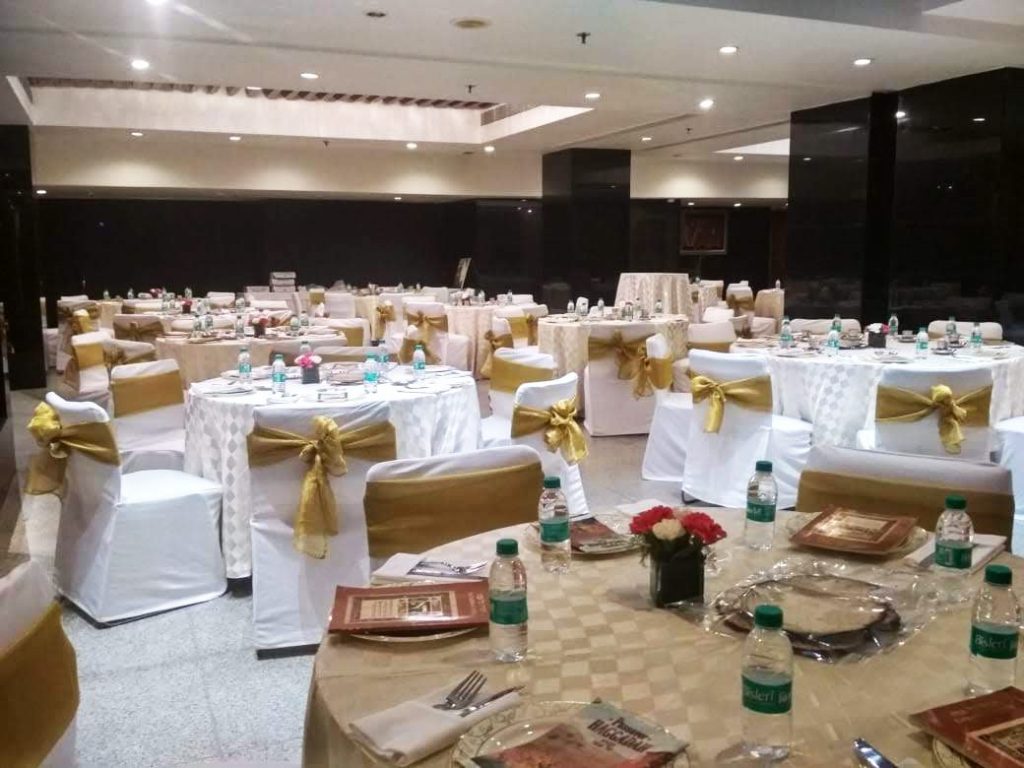
Our community is made up of Jews from all over the world, and our Seder is very special. We always conduct a “country count” – each person stands up and says where they came from. The diversity here is fascinating, and we always end up with ten to twelve countries represented. All these Jews – from Hungary, France, the United States, Argentina – recline together at one Seder table with us. Some are tourists, others are Jews who live here in Delhi.
Sadly, intermarriage is very common here. Almost always, one member of a couple who comes to us is not Jewish. But despite that, you can see that our holidays matter to these Jews. It’s important to them to participate in the Seder. Compared to other Seders held for travelers, ours is modest – “only” a hundred and fifty people.
Out of Israel, Yom Tov is two days. It might sound difficult to celebrate twice, but I actually see it as an advantage. On the first night, our public Seder takes place, during which we are very busy with all the guests who come. We welcome the guests, my husband leads the Seder, I translate everything into English, and all around there is a lot of noise and people and commotion. Our attention is primarily directed at the guests. The children are active too – they are little shluchim in their own right. My older daughters run activities outside for the children of the guests while the Seder is going on inside.
But on the second night, we have a smaller, more intimate Seder in a family style, and we very much enjoy sitting together. Even if guests come, it’s only a handful. And then we can give our attention to the children.
Logistics — a story unto itself
Once a year we have the opportunity to send a shipping container with things we need here. We do our Pesach shopping already in the summer, around the month of Av. We purchase everything – except for the poultry, which we shecht here, flying in a shochet from Israel for that purpose.
We hold the Seder at a hotel near our home. In one of the early years, we tried to kasher part of the hotel kitchen and prepare everything there, to avoid dealing with transport. My husband lit a high flame to kasher something and the smoke detectors went off and fire extinguishers began spraying. We were afraid they would never let us hold a Seder there again. Boruch Hashem, the hotel staff didn’t get too upset – but we obviously didn’t repeat that. We now prepare all the food at home. All the cooking is done in our kitchen and the food is transported to the hotel on Erev Yom Tov.
When Erev Pesach falls on Shabbos it’s more complicated. We need to bring all the food earlier and reheat it after Shabbos ends. But this arrangement has an upside too – we’ll have time to recover from the pre-Seder preparations and arrive at the Seder with a little breathing room.
A Special Story
Our community includes both families who live here permanently and Israeli families who come temporarily – for instance, to work at the embassy – and return to Israel after a few years.
Two years ago, after we had finished celebrating the Seder and all the guests had already gone, a family from Israel arrived who had just landed in India – meaning their flight landed on the holiday itself. As you can probably deduce from that detail alone, the family was not observant. But despite that, the Seder was important to them, and they wanted to celebrate it with us. We sat down to another Seder at eleven or twelve at night with Jews who simply wanted to draw a little closer to Hashem.
The Chassidishe Vibe #1500 • pp. 10-17
© 2026 Beis Moshiach Magazine. All rights reserved.
This article originally appeared in Beis Moshiach #1500. You are welcome to share it with friends and family by email or in print, provided that you do not change, add to or omit any part of it, you credit the author and Beis Moshiach, and you include a link to archive.bmoshiach.org (written out in full in printed copies).
To republish this article in a newspaper, magazine, book or website, please request permission in advance at [email protected].