Out of the Box
On Sukkos we deviate from our usual way of doing things and go out to a “box” consisting of walls and schach made of not-the-usual materials. However, we know that this is a passing stage and that we will return to our usual homes. Imagine if it wasn’t that way and that our usual home was made of not-the-usual materials… To be able to picture this, come, let’s look at some unexpected materials that are the usual homes of some people in the world.
Read the text of this article
A Plane That Doesn’t Fly
If you’ve been on a plane, you know that it isn’t very comfortable, especially for adults. But if you remove all the seats, a large empty space remains which can serve other purposes like living space.
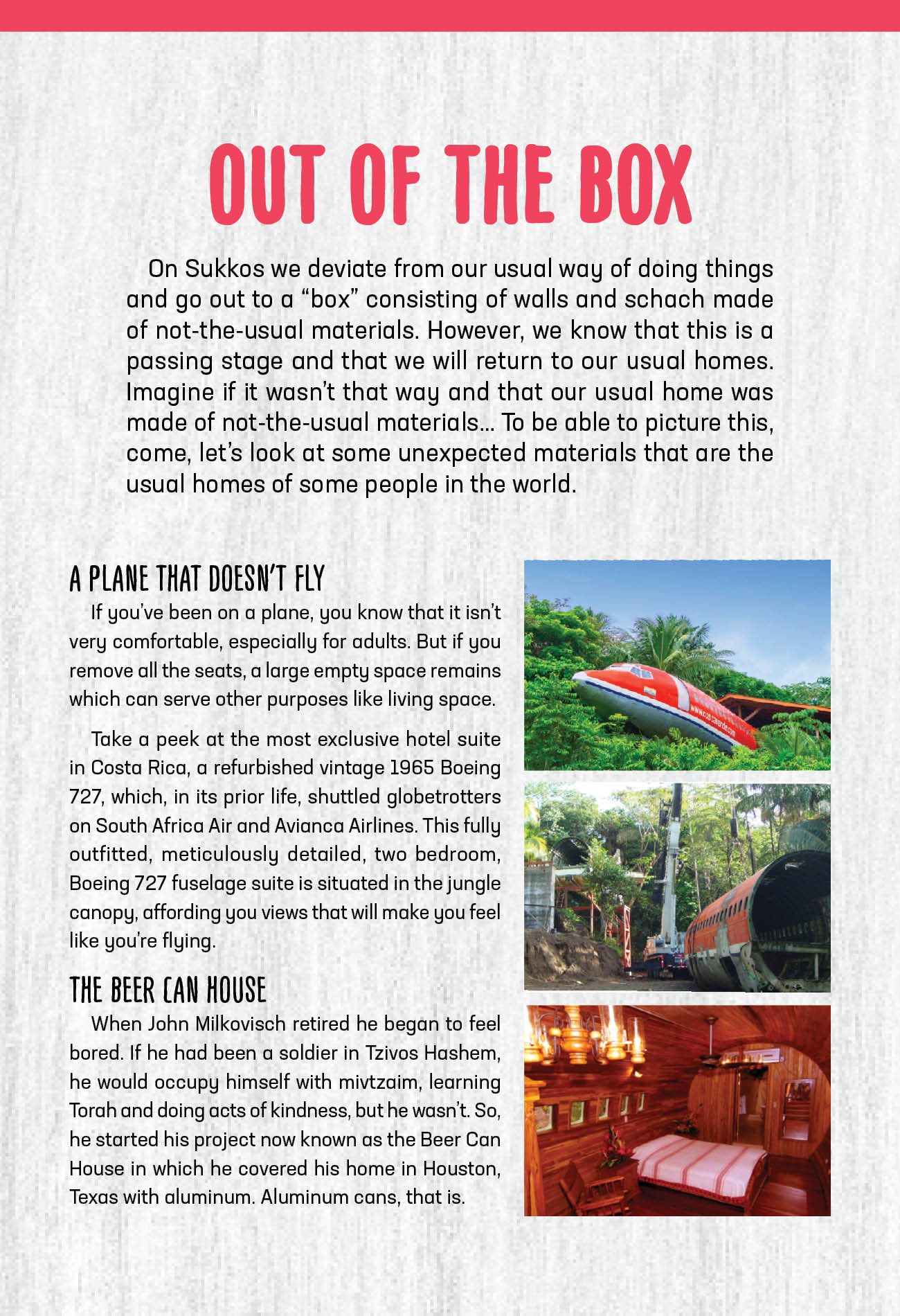
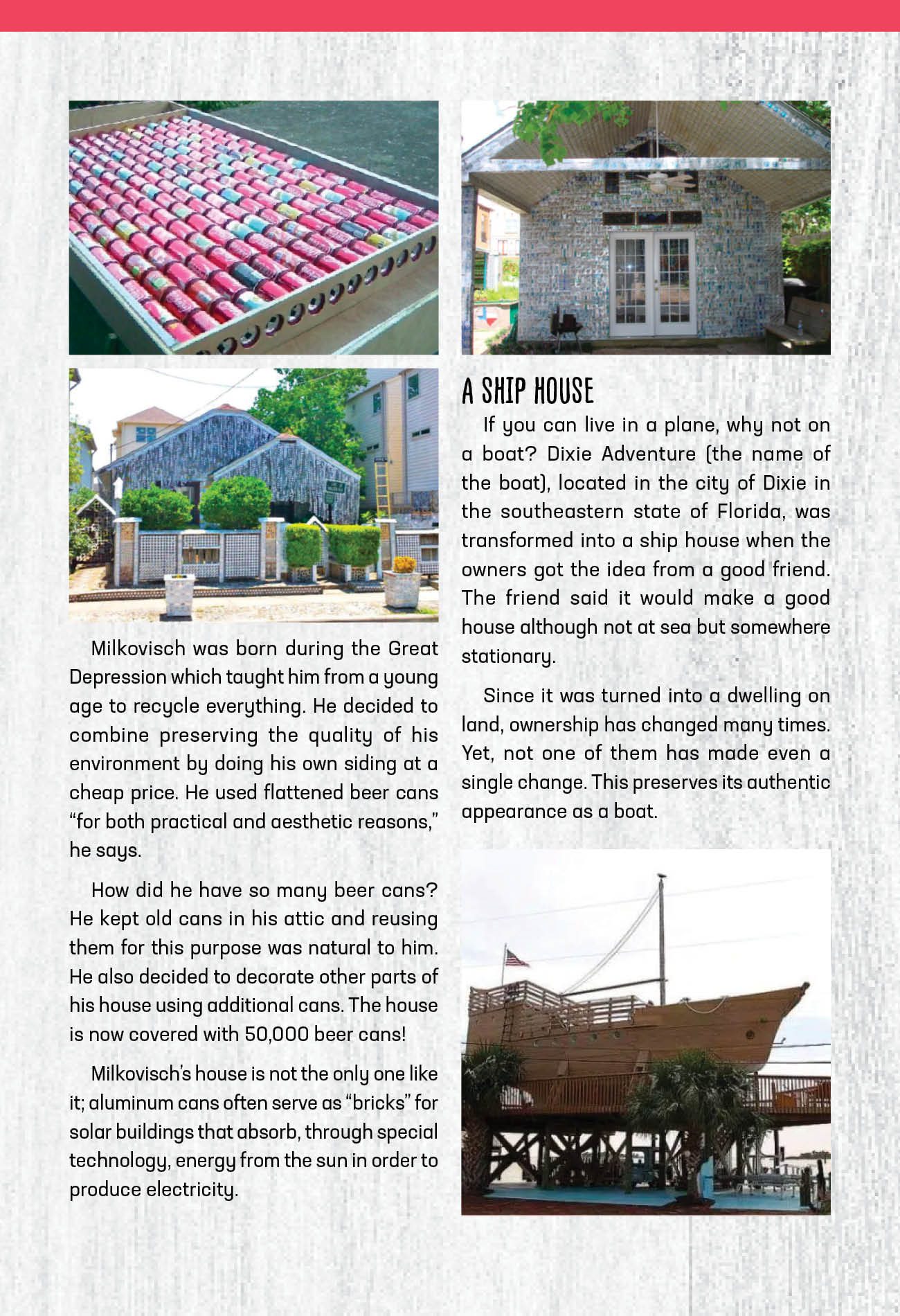
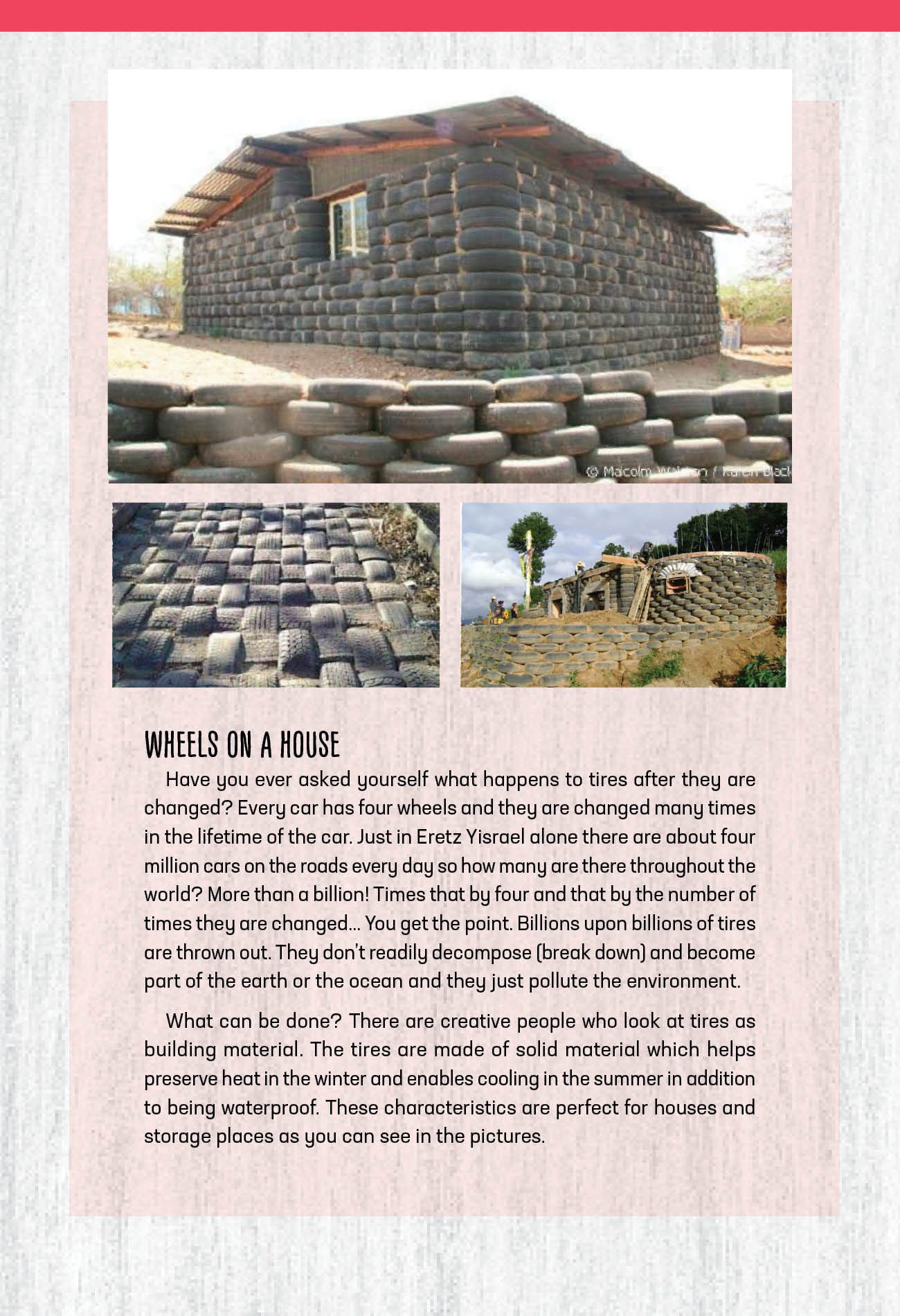
Take a peek at the most exclusive hotel suite in Costa Rica, a refurbished vintage 1965 Boeing 727, which, in its prior life, shuttled globetrotters on South Africa Air and Avianca Airlines. This fully outfitted, meticulously detailed, two bedroom, Boeing 727 fuselage suite is situated in the jungle canopy, affording you views that will make you feel like you’re flying.
The Beer Can House
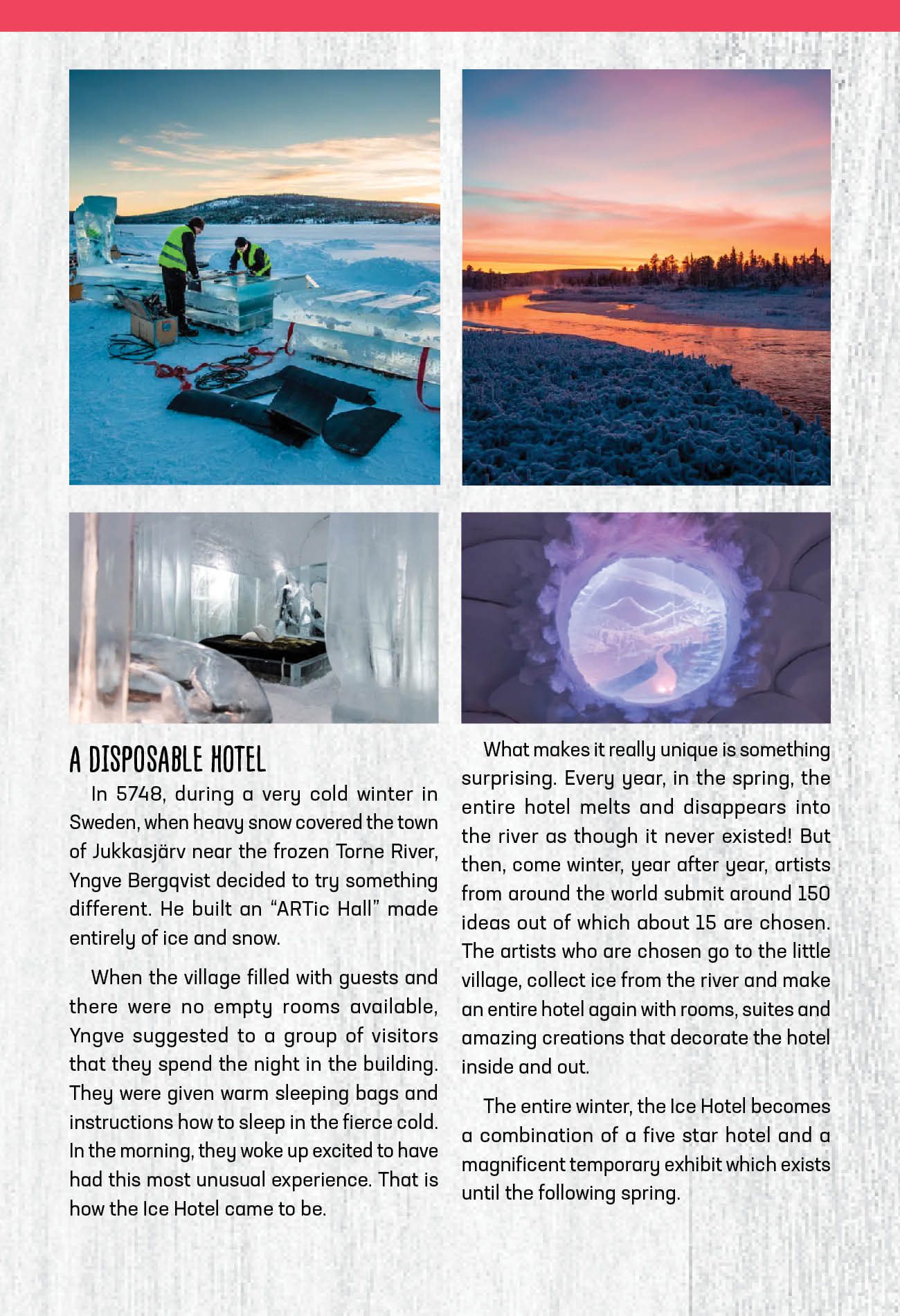
When John Milkovisch retired he began to feel bored. If he had been a soldier in Tzivos Hashem, he would occupy himself with mivtzaim, learning Torah and doing acts of kindness, but he wasn’t. So, he started his project now known as the Beer Can House in which he covered his home in Houston, Texas with aluminum. Aluminum cans, that is.
Milkovisch was born during the Great Depression which taught him from a young age to recycle everything. He decided to combine preserving the quality of his environment by doing his own siding at a cheap price. He used flattened beer cans “for both practical and aesthetic reasons,” he says.
How did he have so many beer cans? He kept old cans in his attic and reusing them for this purpose was natural to him. He also decided to decorate other parts of his house using additional cans. The house is now covered with 50,000 beer cans!
Milkovisch’s house is not the only one like it; aluminum cans often serve as “bricks” for solar buildings that absorb, through special technology, energy from the sun in order to produce electricity.
A Ship House
If you can live in a plane, why not on a boat? Dixie Adventure (the name of the boat), located in the city of Dixie in the southeastern state of Florida, was transformed into a ship house when the owners got the idea from a good friend. The friend said it would make a good house although not at sea but somewhere stationary.
Since it was turned into a dwelling on land, ownership has changed many times. Yet, not one of them has made even a single change. This preserves its authentic appearance as a boat.
A Disposable Hotel
In 5748, during a very cold winter in Sweden, when heavy snow covered the town of Jukkasjärv near the frozen Torne River, Yngve Bergqvist decided to try something different. He built an “ARTic Hall” made entirely of ice and snow.
When the village filled with guests and there were no empty rooms available, Yngve suggested to a group of visitors that they spend the night in the building. They were given warm sleeping bags and instructions how to sleep in the fierce cold. In the morning, they woke up excited to have had this most unusual experience. That is how the Ice Hotel came to be.
What makes it really unique is something surprising. Every year, in the spring, the entire hotel melts and disappears into the river as though it never existed! But then, come winter, year after year, artists from around the world submit around 150 ideas out of which about 15 are chosen. The artists who are chosen go to the little village, collect ice from the river and make an entire hotel again with rooms, suites and amazing creations that decorate the hotel inside and out.
The entire winter, the Ice Hotel becomes a combination of a five star hotel and a magnificent temporary exhibit which exists until the following spring.
Wheels On a House
Have you ever asked yourself what happens to tires after they are changed? Every car has four wheels and they are changed many times in the lifetime of the car. Just in Eretz Yisrael alone there are about four million cars on the roads every day so how many are there throughout the world? More than a billion! Times that by four and that by the number of times they are changed… You get the point. Billions upon billions of tires are thrown out. They don’t readily decompose (break down) and become part of the earth or the ocean and they just pollute the environment.
What can be done? There are creative people who look at tires as building material. The tires are made of solid material which helps preserve heat in the winter and enables cooling in the summer in addition to being waterproof. These characteristics are perfect for houses and storage places as you can see in the pictures.
Salute #1524 • pp. 10-13
© 2026 Beis Moshiach Magazine. All rights reserved.
This article originally appeared in Beis Moshiach #1524. You are welcome to share it with friends and family by email or in print, provided that you do not change, add to or omit any part of it, you credit the author and Beis Moshiach, and you include a link to archive.bmoshiach.org (written out in full in printed copies).
To republish this article in a newspaper, magazine, book or website, please request permission in advance at [email protected].